
111·
14 hours agoIncredible, do you make it a point to be obtuse or is that accidental?

Actually, this town has more than enough room for the two of us
He/him or they/them, doesn’t matter too much
Marxist-Leninist ☭
Interested in Marxism-Leninism, but don’t know where to start? Check out my Read Theory, Darn it! introductory reading list!
Incredible, do you make it a point to be obtuse or is that accidental?
The USSR was a socialist country, and was democratic, so I really don’t know what to make of their comment to be honest.
How on Earth is it a silly question to ask what you mean by “TЯ☭mp?”
If Trump was a communist, that would be nice, but no, I genuinely don’t know what you’re saying here.
TЯ☭mp
What do you mean by this? Are you saying Trump is a secret communist?
The DNC isn’t counter-posed to fascism, though. You can vote out the GOP, but this doesn’t remove fascism, because the basis of fascism is capitalist decay and not this or that capitalist party choice.
For what it’s worth, I have more faith in Nutomic turning around socially than I do Rimu, precisely due to being a Marxist. This doesn’t excuse Nutomic in any way, but it’s worth considering.
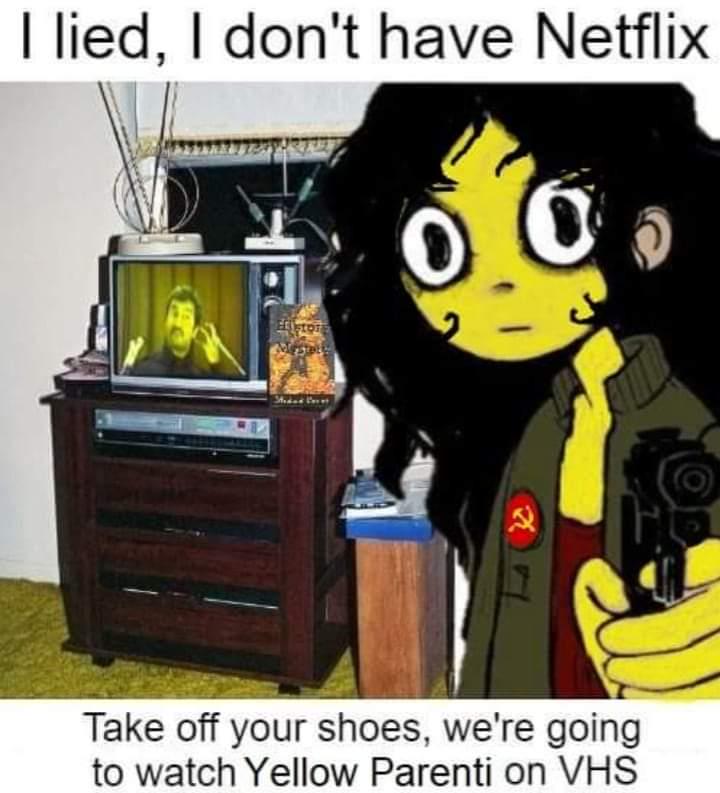
For anyone that hasn’t read or listened to Parenti before, I highly recommend the “Yellow Parenti” Speech and Blackshirts and Reds | Audiobook
This post is about PieFed, which does track up and down votes.
I do agree that often times people invent strawmen to argue against, but I also think it’s important to recognize that those who use “tankie” as a pejorative are opposing those who support existing socialism, and those who use “lib” as a pejorative are opposing those whose words or actions are in service of the status quo.
Yea, he’s pretty much the stereotype of the western faux-left intelligentsia.
Why? Chomsky’s always been shitty. On Chomsky is also a fantastic read for why the left should reject him.
Michael Parenti’s Inventing Reality: The Politics of News Media has always been better than Manufacturing Consent. Maybe to honor Parenti it might be a better name for c/ManufacturingConsent , and not after Chomsky? On Chomsky is also a fantastic read for why the left should reject him.

Again, you are confusing how propaganda works. Propaganda doesn’t “create” sentiment, it appeals to underlying sentiment. The working classes aren’t morally just, nor gullible, nor intelligent, but instead rational, and therefore generally seek narratives that conform to their felt conditions.
It’s not that I confuse cause for effect, it’s that I go deeper, the cause is actually the devastation in capitalism compared to socialism resulting in rising socialist sentiment, the effect is that the nationalists take notice and are trying to twist it into Russian nationalism, causing a struggle between Russian nationalism and socialist nostalgia playing out in the Russian Federation, the effect of which is large increases in CPRF membership and restoration of soviet monuments and nomenclature. Cause and effect do not exist in a vacuum, but are instead the result of endless spirals. Dialectics at work.
Further, the CPRF supports Russia United against Kiev in the war, and has taken a stance of critical support. The fact that United Russia is doing better electorally right now doesn’t mean communism is falling out of favor, but that communist analysis is rallying around the nationalists in Russia, and partisans aren’t willing to advocate for overtaking the current system at the moment.
This also explains why polling suggests that sympathies for the Soviet Union mostly (not fully) consist of cultural and military pride.
Polling does not suggest this, it suggests that the increase in poverty, austerity, sex work, drug abuse, homelessness, and overall devastation of capitalism wasn’t worth it for the broad majority of society. You seek to explain sentiment derived from real, material economic conditions via culture and vibes, when the culture and vibes are a reflection of the economic base. You did it earlier with the idea that the nationalists are creating soviet pride in a vacuum, ignoring economic conditions, and you do it here again.
As for Ukraine, it’s very convenient that you skip over the Banderite coup in 2014 where the nationalists took political power. Ukraine did used to be more pro-communist, especially in the Donbass region, but after the western-backed Euromaidan coup the nationalists took political supremacy and started punishing communists. Same for East Germany, after reunification the communists were punished in show trials and purged, leaving the right-wing West German political force with supremacy. This purge of leftists created a vacuum for far-right populists and nationalists, as capitalist devastation combined with a lack of leftist organizing results in the faf-right having free-reign.
Overall, when we take your convenient framing of trends and insistence on explaining demographic shifts not by real, material conditions but instead by a battle of vibes and ideas alone, we have to question your entire thought process. It’s clear that you view history not as a long process that progresses in spirals, but as static snapshots, and the ideas held by the people not as coming from their real conditions economically but instead as beamed from above, and these failures in analysis are why you come to incorrect conclusions.
A rise in party membership in the CPRF does indeed suggest that they are growing, and further establishing legitimacy. National election results in war-time aren’t a major indicator of popularity of the CPRF. Further, no, the nationalists are not creating soviet sympathies, but trying to take advantage of them. Capitalism has been devestating for Russia, and people yearn for the old days when their needs were better taken care of. The nationalists are appealing to that and trying to turn it into Russian pride.
The idea that the nationalists are just beaming sympathies to the heads of the citizenry, rather than the citizenry longing for a working system after the devastation of cspitalism and the nationalists are trying to take advantage of that, is absurd. That’s not how propaganda works, you have to identify actually felt beliefs and leverage them.
Sounds about right for that crowd.
And much more. At the end of the day, the Russian Federation is a bourgeois dictstorship, so it isn’t going to just accept rising communist sympathies at a state level. The nationalists have a balancing act to play, trying to take advantage of rising soviet smpathies without legitimizing socialism.
Gorbachev had also implemented Perestroika, and his policy of Glasnost had weakened the soviet system. The seeds for radical change for the worse and instability were already there. My point isn’t that there was 0 discontent and it flipped to 100% discontent, but that people, despite the various nationalist movements in some of the member-states, overall did support the socialist project up to the end. After the vote, there was the hardliner coup, dramatic sharpening of contradictions, and the internal, anti-democratic dissolution by Yeltsin claiming legitimacy from the rising nationalist movements.
You have no evidence supporting your claims other than the idea that there was some discontent, which I never denied, and that people ultimately lost faith in the stabilty of the soviet union right at the end itself. Further, support for returning to socialism doesn’t simply “evaporate,” and again, it depends highly on the political fuckery in the region, the purging of communists by westerners, and the sheer devastation these countries went through. Trying to chalk it all up to simple pride in a stronger nation instead of the actual material benefits is an extraordinary claim.
Russia and Belarus, for example, are seeing rising waves of socialist sympathy among the populace. The CPRF is rising rapidly, and people fundamentally feel that capitalism should not last any longer. This represents the large majority of the post-soviet population.








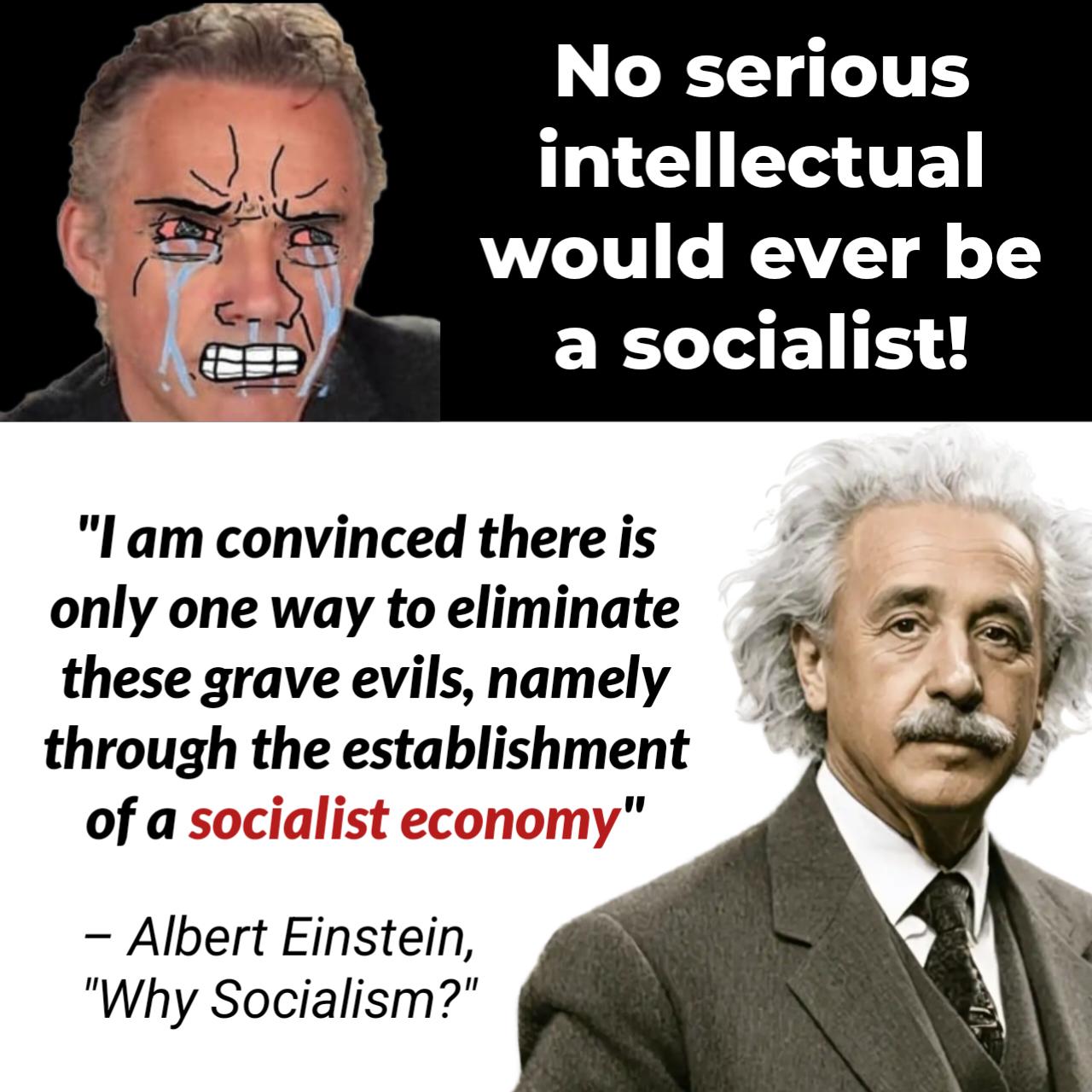
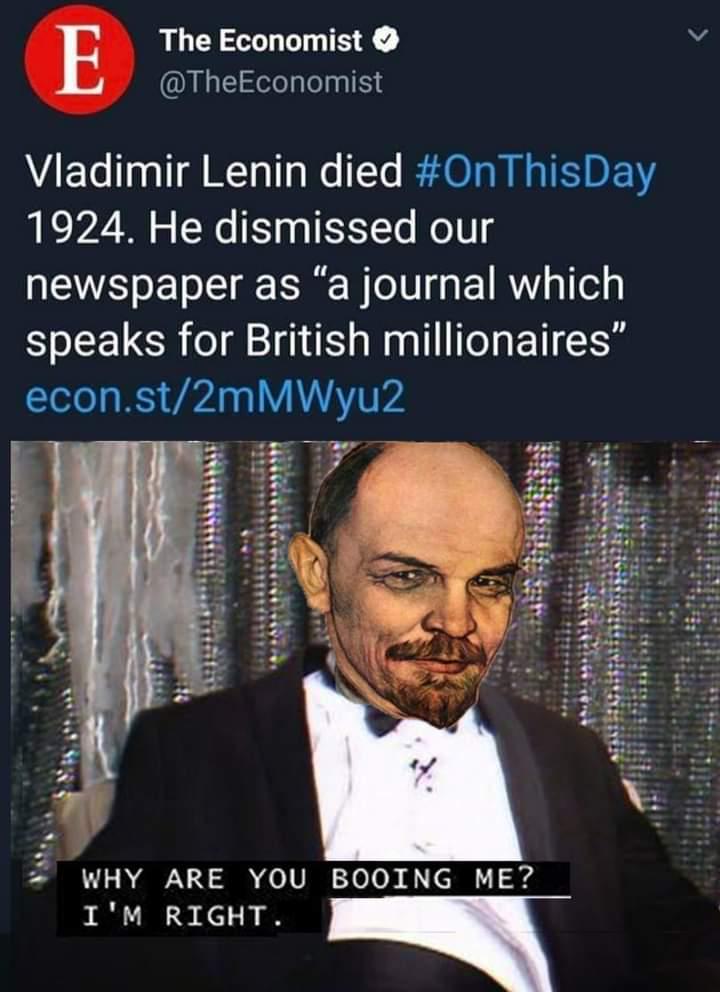

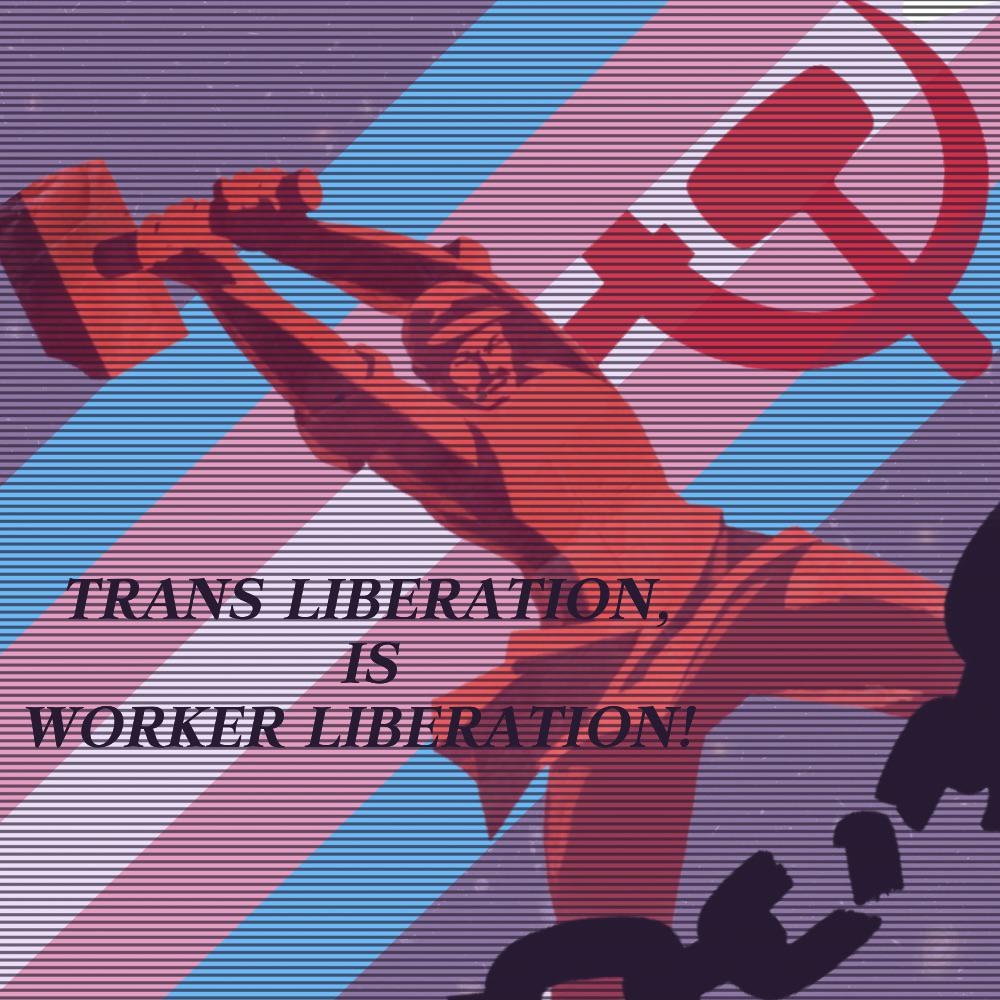
That you’re trolling? Sure.